



Up
Down
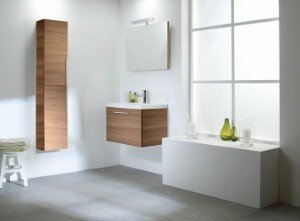
While homeowners are often happy to splash the cash on fancy furnishings for the bedroom and attractive splashbacks in their open-plan kitchens, due to its small size the bathroom does have a habit of being neglected when it comes to interior design.
However, this room may be small, but it is also one of the most used rooms of your home, so it really pays to save some time and finances to create your perfect bathroom interior.
But one of the problems householders instantly stumble upon when carrying out renovations is how to combine functionality with style, since any interior designer will tell you that practicality is key when it comes to bathrooms
Unlike other rooms in the home, your bathroom has to contend with high levels of moisture - whether from condensation from the shower, spills out of the bath or splashes from bathroom taps when tooth brushing - so it is essential that you pick materials and fixtures that can handle this.
Wood is often a popular in bathrooms and can be practical provided it is treated, while stone is another common material used in bathroom design.
However, in terms of practicality and appearance, Stuart White, managing director of Bushboard.co.uk, claims that solid surfacing can be the ideal material for use in the bathroom.
"Solid surfacing is an upcoming material for the bathroom, having established itself firmly in the kitchen sector," he says. "Technically, solid surface is a high-performance, easy-maintenance [and] 100 per cent waterproof material, which can be seamlessly jointed to create luxurious wet rooms.
"It has none of the ongoing care and maintenance issues [that you get with] stone and is easy and quick to install - making this a material with powerful functional and aesthetic attributes."
But whether you opt for wood, stones, tiles or solid surfacing in your bathroom, it is essential to remember to take proper care of the material to ensure that your maintain it's appearance and functionality fro as long as possible.
Leave those bland ceramic tiles on the shelf and go for something a little less manmade next time you redecorate your bathroom ...
It seems that 'green' is the buzzword in interior design this season, with many of us keen to show off our eco-friendly credent...
While some of us will have spent the bank holiday weekend lazing at home indulging in far too many Easter eggs, it seems that m...
Why shop with us Flexible delivery
Huge stocks
Premier service
Free delivery
PayPal payment
Money Back Guarantee
Finance Available
About Our Products Long Lasting Solid Brass
Mirror Finish Chrome
Drip Free Ceramic Discs
Constant Temperature Control
Safety Assured Heated Towel Rails
Advanced Shower Mixer
10 Year Warranty
How can we help? Contact us
Track order
Return an item
Delivery prices
My account
Warranty information
Price match
Further information? About us
Meet the team
Privacy
Security
Terms & conditions
Sitemap
Affiliate Program
Join us  Blog
Blog
 Facebook
 Twitter
 YouTube
 Google+
Home Basins Pedestal Basins
Counter Top Basins
Cloakroom Basins
Corner Basins
Toilets Close Coupled Toilets
Back To Wall Toilets
Toilet Accessories
Traditional Suites Contemporary Suites
Baths Modern Freestanding Baths
Traditional Baths
Shower Baths
Freestanding Taps
Bath Shower Screens
Bath Waste
Bath Panels
Bathroom Furniture Showers Concealed Showers
Hand Held Shower Heads
Shower Arms
Riser Rails
Shower Accessories
Shower Enclosures & Cubicles Bi-Fold Shower Enclosure
Pivot Shower Enclosure
Quadrant Shower Enclosure
Walk In Shower Enclosure
Wet Rooms
Shower Enclosure Trays Offset Quadrant Trays
Rectangular Trays
Bathroom Taps Basin Taps
Bath Taps
Bidet Taps
Wall Mounted Taps
Basin Waste
Bath Waste
Hand Held Shower Heads
Standpipes
Kitchen Taps Towel Radiators & Heated Towel Rails Traditional Towel Radiators
Electric Towel Radiators
Chrome Pipe Covers

 Expand Basket

Follow & Subscribe